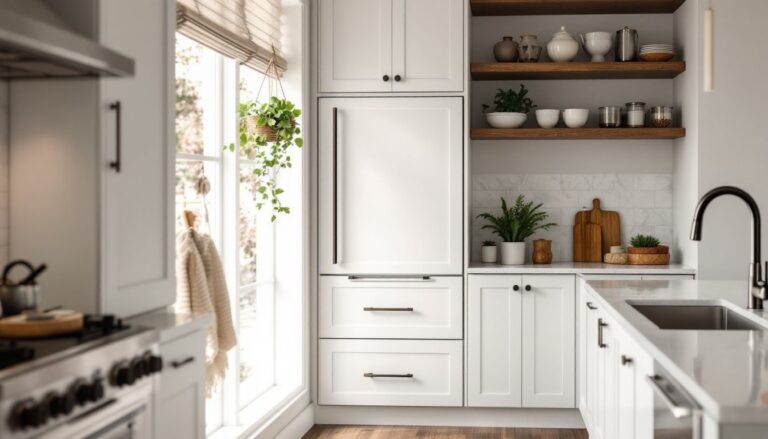
A dishwasher curtain, a simple fabric panel hung in front of an open dishwasher alcove or nook, solves a real design problem many homeowners face. Unlike a full cabinet door or built-in front panel, a curtain hides clutter and the bulky appliance itself while maintaining easy access. It’s affordable, reversible, and works especially well in open-concept kitchens or smaller spaces where a traditional door swing would eat up room. Whether your dishwasher sits in an under-counter nook, next to a pantry, or in a recessed area, a curtain transforms that visual dead zone into an intentional design element. This guide walks you through the why, the how, and the style options so you can choose the right approach for your kitchen.
Table of Contents
ToggleKey Takeaways
- A dishwasher curtain is an affordable, non-permanent solution that hides clutter and appliance bulk while maintaining easy access and air circulation around your dishwasher.
- Linen blends and cotton-polyester mixes work best for kitchen environments due to their durability, moisture resistance, and ease of care—avoid thin synthetics and heavy velvet that trap dust or encourage mildew.
- Proper installation requires measuring your alcove width plus 2–4 inches overlap, using a level to ensure even bracket placement, and testing that the dishwasher door swings freely without snagging.
- A dishwasher curtain costs only $30–$150 total and takes minutes to install with basic tools, making it perfect for renters or homeowners considering a future appliance upgrade.
- Regular maintenance—weekly vacuuming, spot cleaning water spots, ensuring good kitchen ventilation, and replacing every 3–5 years—keeps your curtain looking fresh and prevents mold in damp kitchen environments.
What Is a Dishwasher Curtain and Why Install One?
A dishwasher curtain is a fabric panel that hangs on a rod in front of your dishwasher, concealing the appliance and its interior when closed. Unlike a cabinet door, it doesn’t swing out and doesn’t require hinges or mounting hardware on the appliance itself, it hangs independently from the cabinetry or wall above.
Why install one? First, it keeps sight lines clean. An open dishwasher nook, especially one that faces your main living area, draws the eye and makes a kitchen feel disorganized. A curtain hides the clutter inside and the appliance’s exterior in one move.
Second, it’s non-permanent and flexible. You can remove or swap the curtain in minutes: no tools needed. This makes it perfect for rental properties, temporary coverage, or kitchens where you might eventually upgrade to a fully integrated or panel-ready dishwasher.
Third, it costs far less than cabinet refacing or a new appliance panel. Depending on the fabric and rod, expect to spend $30–$150 total. Many homeowners also appreciate that curtains allow air circulation around the dishwasher, which some built-in doors restrict.
Material Options for Dishwasher Curtains
The fabric you choose directly affects how the curtain looks, lasts, and functions in a damp kitchen environment.
Linen and linen-blend fabrics are lightweight, have a natural, tailored appearance, and breathe well. A 54-inch-wide linen works nicely for standard under-counter dishwasher alcoves. Linen wrinkles naturally (which is part of its charm), but it does require occasional pressing. It’s durable and only gets softer with age.
Cotton blend or cotton sateen offers structure and a subtle sheen without looking overly formal. Cotton holds up well in humidity and is easy to launder. A 50% cotton, 50% polyester blend resists wrinkling better than pure cotton and dries faster, a smart choice for a kitchen where moisture lingers.
Thermal or blackout-lined fabrics work if you want extra insulation or light blocking, but they’re overkill for most dishwasher curtains. They’re heavier and can restrict airflow.
Avoid thin synthetics or sheers in direct kitchen areas: they snag easily, show water spots, and feel cheap. Heavy velvet or dense tapestries trap dust and moisture, leading to mildew in poorly ventilated spaces.
Fabric Choices That Work Best
Choose a color and pattern that complements your cabinetry and backsplash. Solid neutrals, cream, gray, soft sage, or warm white, integrate quietly and work with almost any décor. Subtle patterns like small geometrics or tonal checks add visual interest without screaming for attention. Bold prints work if your kitchen already has colorful accents, but they date faster.
Look for pre-made café curtains or rod-pocket panels in standard sizes (36 inches, 42 inches, 48 inches wide) at fabric stores or online retailers. Alternatively, buy fabric by the yard and have it hemmed at a local seamstress ($15–$30) or use iron-on hem tape if you’re handy with a steamer. The iron-on method works but requires care when washing, turn the curtain inside out on the gentle cycle.
Design and Style Ideas for Every Kitchen
Your dishwasher curtain doesn’t have to be plain. Think of it as a small design moment that ties the room together.
Minimalist modern kitchens pair well with a flat-weave linen curtain in stark white or charcoal gray. Keep the rod and hardware chrome or matte black to match cabinet handles.
Farmhouse or cottage kitchens welcome warmer tones, cream, soft sage, or a small gingham check. A brass or oil-rubbed bronze rod reinforces that vintage warmth.
Eclectic or bohemian spaces can pull off a patterned fabric: a geometric print, a subtle paisley, or even a heritage weave. Pair it with a natural wood rod and macramé or beaded trim along the bottom for extra character.
Transitional kitchens (mixing traditional and modern) benefit from a tone-on-tone subtle texture, a linen damask or a jacquard weave in soft gray or warm taupe. This grounds the look without competing with other design elements.
Look at kitchen design ideas on The Kitchn for inspiration on how other homeowners have styled similar spaces. You’ll also find community discussions about dishwasher curtain solutions on Houzz where real homeowners share their challenges and what worked for them.
Consider pairing the curtain with matching or coordinating linens, a tea towel, a pot holder, to create cohesion. Or let the curtain be subtle and let your countertop décor or open shelving steal the show.
Installation Guide: Hanging Your Dishwasher Curtain
Installing a dishwasher curtain is straightforward and requires only basic tools. Here’s the process:
Tools you’ll need:
- Tape measure
- Level
- Drill with bits (if mounting to cabinetry) or adhesive hooks (for renters)
- Curtain rod (⅝-inch or ¾-inch diameter, typically 24–48 inches long)
- Brackets (usually come with the rod) or tension rods
Materials checklist:
- Curtain panel or two café-style panels
- Finials (decorative rod ends) if not included
- Wall anchors or toggle bolts (if mounting to drywall instead of cabinet)
Steps:
-
Measure the opening. Measure the width of your dishwasher alcove or nook. Add 2–4 inches on each side so the curtain overlaps and hides the edges. Measure from just above the dishwasher top to about 2 inches below it (or where you want the hem to land).
-
Choose your mounting method. For cabinet-mounted brackets, drill pilot holes into the cabinet frame above the opening, use a ¼-inch bit and 1¼-inch wood screws. If mounting to drywall, use toggle bolts or heavy-duty anchors: drywall alone won’t support a full curtain’s weight. A tension rod (one that spans the opening without hardware) works beautifully if your alcove is between two stable surfaces.
-
Install the rod brackets. Ensure brackets are level using a 24-inch spirit level. Even a slight tilt looks sloppy and affects how the curtain hangs. Space brackets 6–8 inches from the edges of the opening.
-
Hang the curtain. Slide the fabric’s rod pocket over the installed rod, or use clip-on rings if that’s your setup. Adjust so the panel hangs evenly and clears the dishwasher door by about ½ inch.
-
Test the swing. Open the dishwasher door fully to make sure it doesn’t snag the curtain. Adjust the curtain’s position or width if needed.
For detailed step-by-step guidance on DIY curtain-hanging techniques, DIY project tutorials on Instructables, where makers share custom solutions for alcove coverings.
If your dishwasher is in an odd-sized or asymmetrical nook, consider a custom curtain track system. These are pricier but allow precise control over panel width and overlap.
Maintenance and Care Tips
A kitchen curtain faces steam, splashes, and dust. Here’s how to keep it looking fresh.
Regular upkeep: Shake out or vacuum the curtain weekly to remove kitchen dust and lint. Most fabrics shed less if you give them a gentle brush.
Spot cleaning: Wipe water spots or mild splatters with a barely damp microfiber cloth. Blot, don’t rub. For greasy splatters, use a cloth dampened with mild soapy water (1 teaspoon dish soap per cup of water), then rinse with a clean, damp cloth.
Deep cleaning: Remove the curtain from the rod and wash in cool water on a gentle cycle with mild detergent. Air-dry by hanging it back on the rod, this prevents wrinkles and lets it dry in place. If you used iron-on hem tape, wash inside-out to protect the seams.
Mold and mildew prevention: Ensure your kitchen exhaust fan runs during and for 10 minutes after dishwashing. Moisture is the enemy: good ventilation beats any fabric treatment. If mildew spots appear even though airflow, soak the affected area in a solution of 1 part white vinegar to 3 parts water for 15 minutes, then rinse and dry.
Ironing (if needed): Set your iron to low-medium heat, use a pressing cloth between the iron and fabric, and steam linen or cotton gently. Never iron polyester blends on high heat: they’ll melt or shine unevenly.
Replace the curtain every 3–5 years, or sooner if it shows persistent stains or wear. At the cost of a decent curtain panel, replacement is affordable and keeps your kitchen looking intentional.
Conclusion
A dishwasher curtain is one of those small-scale DIY projects that delivers outsized impact. It hides an awkward space, costs little, and gives you total creative control. Whether you go minimal or patterned, linen or blended cotton, the key is choosing a material that suits your climate (humidity matters), your style, and your maintenance tolerance. Measure twice, install once, and you’ll have a solution that works for years, or swap it out next season if you want a fresh look. It’s proof that sometimes the best kitchen improvements are the simplest ones.